Strengthen Your VDA Readiness for Automotive Customer Expectations.
OINDC helps automotive manufacturers and suppliers understand applicable VDA requirements, assess current practices, strengthen process controls, improve evidence and prepare teams for customer and quality audits.
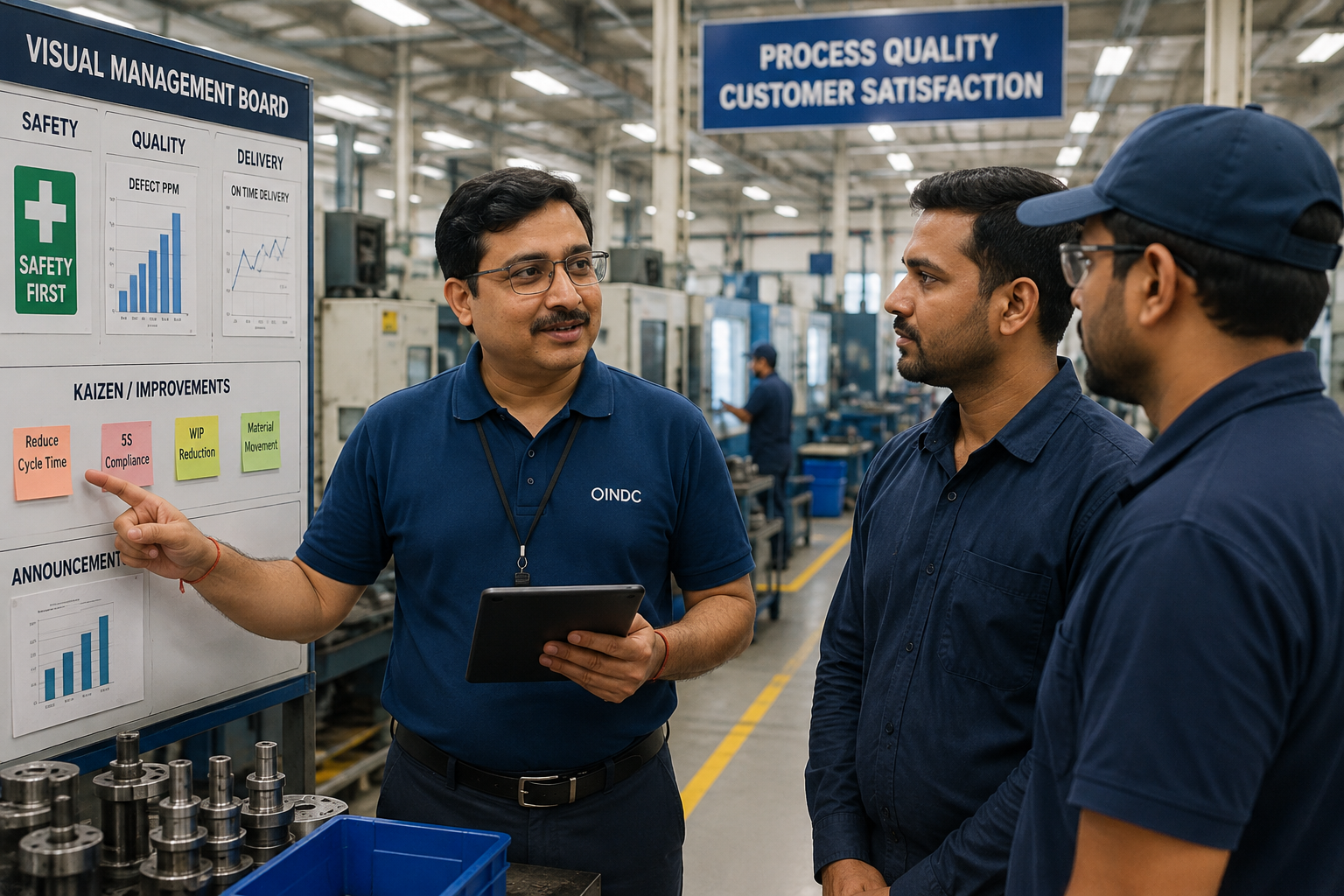
What Is VDA?
VDA refers to the German Association of the Automotive Industry and its quality-management publications, methods and guidance used across the automotive supply chain. Depending on your customer requirements, VDA expectations cover quality management, process audits, product audits, maturity assurance, and risk controls.
Important Note: VDA standards are method-based frameworks for automotive excellence. OINDC provides practical implementation, training, and audit readiness support for your plant.
What VDA Requirement Are You Preparing For?
Select the specific automotive quality method or audit expectation relevant to your organization.
VDA 6.3 Process Audit
Assess and improve process-audit readiness and manufacturing process effectiveness across product development and serial production.
VDA 6.5 Product Audit
Strengthen product-audit planning, execution, sampling, defect evaluation and corrective-action tracking where applicable.
VDA Maturity Level Assurance (MLA)
Support applicable maturity and project-readiness expectations (RGA/MLA) for new parts based on OEM customer requirements.
VDA / Automotive Quality Methods
Map applicable methods (e.g. VDA Robust Production, Field Failure Analysis) to actual product, process and customer requirements.
Customer-Specific VDA Expectations
Identify specific German/European OEM requirements (e.g., VW, BMW, Mercedes-Benz suppliers) and deploy them to responsible processes.
VDA Customer Audit Coaching
Conduct mock shopfloor process walks, train process owners, and prepare objective evidence before external customer auditors arrive.
VDA 6.3 Process Audit Readiness
Prepare your manufacturing and support processes for effective process assessment.
1. Process Understanding
Review process flow, inputs, outputs, process interfaces, and operational controls.
2. Risk & Planning
Assess relevant operational risks, APQP milestones, and planning controls.
3. Incoming & Supplier
Review supplier evaluation, incoming quality inspection, and performance monitoring.
4. Production Process
Evaluate work instructions, equipment maintenance, operator competence, and reaction plans.
5. Customer Focus
Review customer complaints, zero-mileage failures, field performance, and escalation mechanisms.
6. Change Management
Strengthen controls and approval mechanisms for engineering, product, or process changes.
7. Process Performance
Use OEE, scrap rates, first-pass yield, and delivery efficiency data to target improvements.
8. Corrective Action (CAPA)
Strengthen root-cause analysis (8D), corrective action implementation, and effectiveness verification.
Connecting VDA Methods with IATF 16949 & Core Tools
IATF 16949 and VDA methods should not be treated as separate, disconnected systems. An automotive organization needs an IATF-based QMS operating alongside applicable customer-specific VDA requirements. OINDC helps map these requirements directly into your daily manufacturing processes.
OINDC VDA Assessment Methodology
Preparing for a VDA or Customer Audit?
Tell us what your customer or internal quality team is expecting. OINDC will help identify the applicable VDA requirements and guide your plant to complete audit readiness.
Get VDA Readiness Assessment
VDA Audit Readiness FAQ
Clear answers regarding VDA standards, audits, and compliance.
What is VDA?
VDA refers to the German Association of the Automotive Industry and its quality-management methods and publications used across the automotive supply chain. Applicable requirements depend on your specific customer expectations.
Is VDA 6.3 a formal certification?
VDA 6.3 is primarily a process-audit methodology used to evaluate manufacturing process effectiveness, rather than a standalone company-wide certification scheme.
Do we need VDA if we already have IATF 16949?
Yes, frequently. Many German and European automotive OEMs (and their Tier 1 suppliers) mandate VDA process audits (VDA 6.3) or product audits (VDA 6.5) as explicit Customer-Specific Requirements alongside IATF 16949.
How does OINDC support VDA readiness?
OINDC conducts gap assessments, reviews shopfloor controls, trains process owners, verifies objective evidence, and guides mock audits so your team faces customer audits with confidence.
Your Customer Audit Is Easier When Your Processes Are Ready.
OINDC helps automotive organizations identify gaps, strengthen processes, train people and build objective evidence for VDA expectations.